- Home
- Navigation ⌄
- Aussie Owner's Manual
- Guide To Australian Shepherd Training & Care
- What's New?
- New Articles
- New Forum Posts & Articles
- Forums
- Create a Page About Your Aussie
- Question & Answer
- Aussie Art
- Rainbow Bridge
- Aussie Mix Forum
- Training
- Training Your Aussie
- Dog Training Videos
- Dog Sports
- Wide World of Dog Sports
- Agility Training
- Getting an Aussie
- Aussie: Right For You?
- Aussie Rescue
- Choosing a Breeder
- Aussie Breeders Directory
- Aussie Puppies For Sale
- MAS Breeders Directory
- MAS Puppies For Sale
- Puppy Care
- Favorite Puppy Names
- Care & Feeding
- Dog Nutrition
- Best Dog Food Brands
- Best Bully Sticks
- Dog Food Ingredients
- Raw Dog Food Diet
- Dog Grooming
- Stuff for Your Aussie
- Dog Supplies & Products
- Dog Collars & Harnesses
- Popular Pages ⌄
- Recommended ⌄



Dog Food Ingredients—What's in the Bag?
Dog food ingredients vary from one company to the next. Some are wholesome and pure. Others are not so great. Reading the label can be confusing. Everyone is familiar with meat and grains. But what are all those other things?
Dilated Cardiomyopathy (DCM) Notice
DCM is a heart condition that has been reportedly linked to certain low carbohydrate dog foods. However, the FDA has still not confirmed a specific cause and its latest study is also inconclusive. As such, at the time of this writing (July 16, 2020) there have still not been any recalls. For further information see: FDA, Dog Food Advisor article, and an article by Daniel Schulof, the founder and CEO of KetoNatural Pet Foods, Inc. addressing potential Bad Science and Financial Conflicts of Interest Plaguing the FDA's Investigation Into "Grain-Free" Pet Foods and Dilated Cardiomyopathy.

Even the meat and grains might need better definitions. Some companies list beef, chicken, lamb or another meat, although they are not required to do so. Pet owners trying to isolate and eliminate allergens need to buy a brand that lists the exact kind of meat that is used. Otherwise, they may never be able to relieve their dog's symptoms.
The grains commonly found in pet foods include wheat, rye, barley and corn. Wheat is a commonly used grain. When pets experience allergic reactions to the foods they eat, it is sometimes due to wheat. Humans are not the only creatures to experience gluten intolerance. Dogs have the problem, too. For more info on that see Dog Food Allergies.
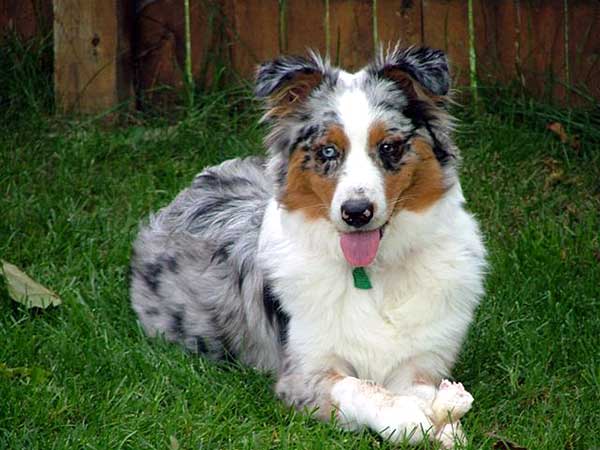
Bruce and Lynda Chansky
The health of your Australian Shepherd depends on the quality of the dog food ingredients in the food you buy.
This is our Ms. Chloe. This photo was when she was 10 months old. She is very mouthy and she patrols the yard very aggressively to make sure the squirrels don't violate her territory.
Let's Define Some Other Dog Food Ingredients
Meat and Bone Meal
Meat and bone meal is a byproduct of the slaughtering industry. Animal parts such as bones, blood, tissues and internal organs, as well as the animal's stomach contents and butcher shop trimmings are rendered using high heat and dehydration to create a meal. The nutritional content of the meal varies, but it is usually around 50% protein and about 10% fat. The rest is ash, which is sometimes counted as a carbohydrate in the nutritional analysis.
Meat Byproducts
Meat byproducts include the animal parts listed above, but they are not rendered. Manufacturers typically process them in some way to make them seem more appetizing to humans. Most "wet" pet foods contain meat byproducts.

Chicken Byproduct Meal
The term "meat" can only be used in the industry to refer to parts that come from cattle, hogs, sheep and goats. So, sometimes you will see chicken byproduct meal listed on a label. The only difference between chicken byproduct meal and meat and bone meal is that the parts used are those left over after slaughtering chickens. Backs and rib bones, necks, feet, etc.
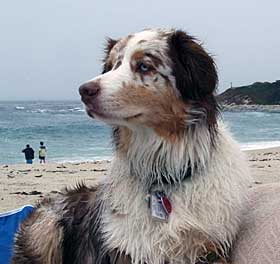
Steve and Sheila Shull
Copper, enjoying a day at the beach, has the sweetest disposition you have ever seen.
Fish Meal
Fish meal is not one of the common dog food ingredients, but it is typically found in cat foods. Some manufacturers use fish meal to increase protein content or because it goes well with ingredients like lamb. In the process of rendering fish meal, all parts of the fish are used. Only the oils are "squeezed" out, because they are used in the supplement industry.
Beef Tallow
Beef tallow is rendered fat. Like lard and vegetable shortening, it is solid at room temperature and has a relatively high melting point.
Clearly, many dog food ingredients are not appetizing. They wouldn't even be appetizing to the dogs were it not for the addition of salt and artificial flavorings.
Most of the items mentioned above have little or no nutritional value. The meals, for example, contain few nutrients. Because of that, manufacturers fortify their products with vitamins and minerals. Many of the vitamins used are synthetics derived from petrochemicals. The same is true of human dietary supplements.
The dog food ingredients in higher quality products are better. Some companies do use real meat and less wheat. For example, one company that takes the quality of its dog food ingredients seriously is Wysong Pet Foods. Find out more about Wysong dog food here.
Alternative foods have emerged in recent years. Some became popular after so many animals died from tainted products, most of which were made in China.
Hypoallergenic foods have been introduced due to increased number of food allergies among dogs. Frozen, dehydrated, fresh, homemade and even vegetarian foods are also available from a variety of manufacturers. You can find them in specialty stores or purchase them over the internet.
Learning more about dog food ingredients is a good idea for everyone who loves dogs. The knowledge makes it easier to choose a good brand for the dogs you love.


Have Dog Training Questions?
Check out these introductory dog training videos...
I want my dog to stop being aggressive.
I want some help training my new puppy.
I want my dog to stop barking at everything.

Get Australian Shepherd Info, Website Updates, Special Offers, and Cartoons...
FREE GIFT
You'll also receive a free copy of the ebook
My Everyday Dog Training Tools
by professional dog trainer Daniel Abdelnoor, "Doggy Dan"